ENGIE India
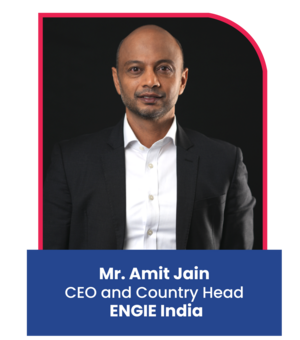
Mr. Amit Jain
CEO and Country Head, ENGIE India
1. In today’s evolving global landscape, what does being a 'future-ready organisation' mean to you, beyond technology and digital transformation?
At ENGIE, being a future-ready organisation goes beyond technology—it starts with people. As the energy sector evolves, we are continuously investing in upskilling, leadership development and fostering a culture of learning that enables our teams to adapt, innovate and lead through change.
Future readiness also means embracing new technologies responsibly. As AI and digital tools transform the way we work, we are empowering employees to combine technological capabilities with human expertise, enabling smarter decisions, greater agility and operational excellence.
Equally important is creating an inclusive and supportive workplace where diverse perspectives are valued, wellbeing is prioritised and everyone has the opportunity to grow. We believe that innovation thrives when people feel empowered, respected and connected to a shared purpose.
Ultimately, a future-ready organisation creates value beyond business performance. It balances growth with responsibility towards its people, the environment and the communities it serves. Guided by our purpose to accelerate the transition towards a carbon-neutral economy, we are committed to building a resilient, sustainable and people-centric organisation that is prepared for the challenges and opportunities of tomorrow.
2. At a time when geopolitical alliances are being reshaped, what, in your view, makes the India-France partnership particularly resilient and future-oriented?
The India France partnership has always been built on more than diplomacy. It is anchored in shared values, long term trust and a common vision for sustainable growth. These qualities make the relationship particularly resilient at a time when global alliances are evolving and supply chains are being redefined. The energy transition is a strong example of this partnership in action. France has been a trusted partner in supporting India’s renewable energy ambitions by bringing together technology, expertise and long-term collaboration.
At ENGIE, we are proud to contribute to this journey. We have developed a renewable energy portfolio of over 2 GW in India (1.3 GW in operations and the rest under various stages of construction) supporting the country’s transition towards a cleaner and more resilient energy system. What makes this partnership future-oriented is its focus on creating long term value. Beyond building renewable energy capacity, it is enabling innovation, strengthening energy security, creating skilled employment and supporting local communities. As India and France continue to work together on climate action, resilient infrastructure and technological innovation, the partnership is well positioned to address future challenges while delivering sustainable economic and social progress for both countries.
3. The India-France Year of Innovation 2026 presents a significant opportunity to deepen technological and entrepreneurial collaboration. How do you see your organisation contributing to this shared innovation agenda?
The India-France Year of Innovation 2026 is an opportunity to build on an already strong foundation of collaboration. Companies like ENGIE demonstrate that innovation between our two countries is already happening every day through the transfer of technology, expertise and local execution. The next chapter is about scaling that collaboration to address increasingly complex energy challenges. At ENGIE, collaboration is central to how we innovate. Through ENGIEUrja.ai, our open innovation platform, we are bringing together startups, innovators and technology partners to co-create solutions for real-world energy challenges. By combining French expertise with India’s entrepreneurial ecosystem, we are helping accelerate the development and deployment of technologies that support the energy transition.
Our commitment to this approach was recognised with the IFCCI Indo French Innovation Partnership of the Year Award, reinforcing the value of collaboration between industry, research institutions and entrepreneurs. Looking ahead, I see significant opportunities for India and France to deepen collaboration in digitalisation, flexible energy systems and skills development. By combining French technological expertise with India’s scale and entrepreneurial spirit, we can accelerate innovations that strengthen energy security and support sustainable economic growth.
4. How important you think are institutions like IFCCI in strengthening trust, dialogue and long-term economic partnerships?
Business relationships may begin with opportunity, but they endure through trust. Institutions like IFCCI build that trust by bringing together businesses, policymakers, innovators and academia on a common platform. Strong partnerships are shaped through sustained dialogue, shared understanding and collective problem solving. IFCCI enables companies to exchange ideas, understand market shifts, identify opportunities and build relationships that extend beyond individual projects.
This is especially important in renewable energy, where investments and partnerships span decades. The energy transition requires alignment across governments, industry, financial institutions, technology providers and communities. Platforms like IFCCI help create that alignment. ENGIE’s journey in India reflects the value of such collaboration. Our evolution from renewable asset development to integrated clean energy solutions has been supported by strong institutional, industry and local partnerships.
As supply chains evolve and new economic corridors emerge, institutions like IFCCI will become even more important. They provide the confidence that encourages investment, enables innovation and turns bilateral engagement into enduring economic partnership.